Oh how much I enjoy this spring break, the calm eye of my annoyingly-annoying-life-of-academic-annoyances storm. Here are a bunch of pictures not featured in earlier posts from the month:
Northern shoveler pair from 3/9 near Shoreline
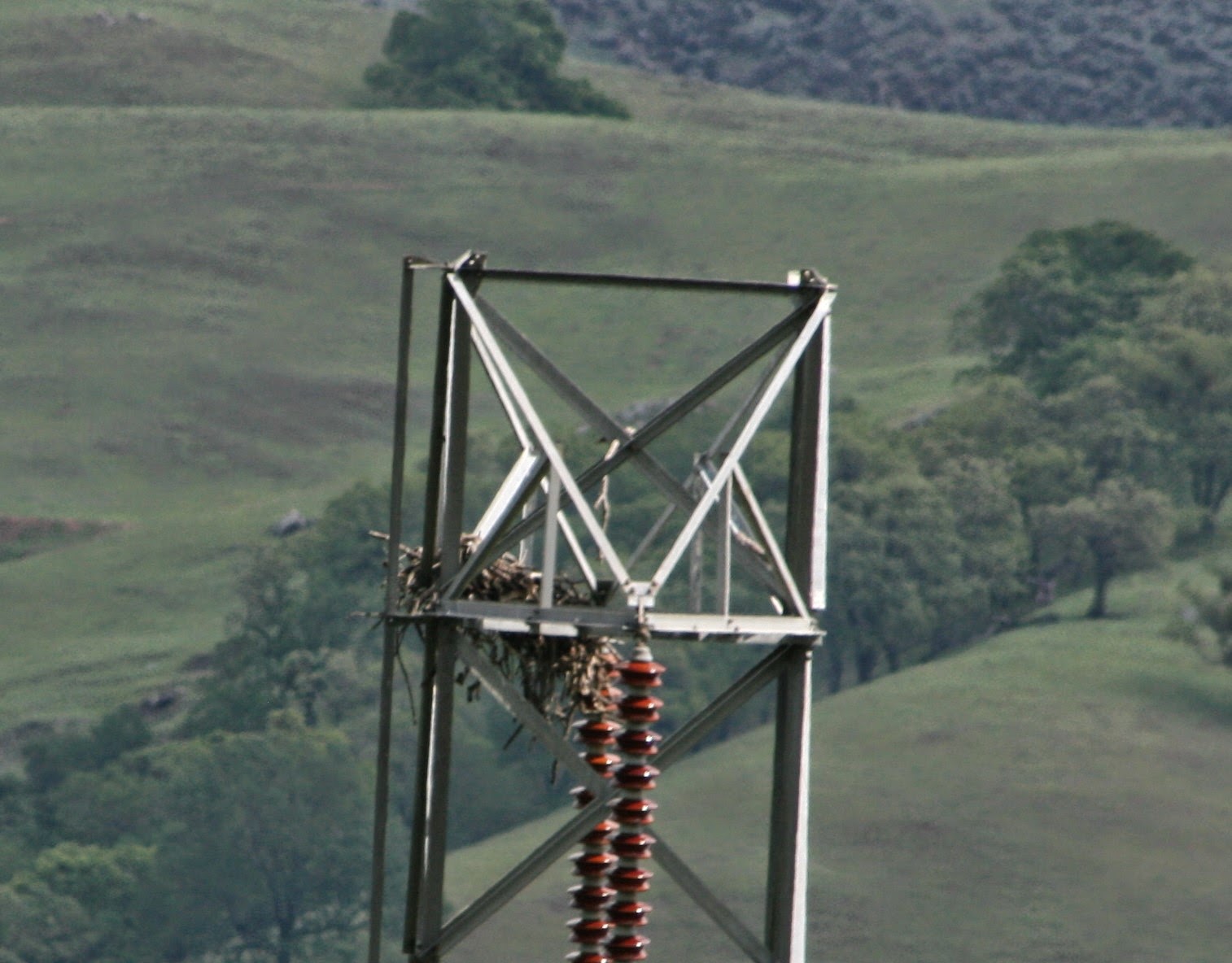
Find the bird
White-crowned sparrow at my school. Taken 3/28/14.
Can't get enough of that adorably adorable baby squirrel at Stanford.
Common gallinule 3/29/14 at Coast Casey Forebay. Taken with my point and shoot.
Crittenden Marsh with water in it. During the summer this area is a barren wasteland while now it is a nice feeding ground for over a hundred shorebirds
Storm brewing by A2E
Great egret starting to show his fabulous breeding trailing feather things. Also taken on the 29th.
This month was decent for birding. Although it was nowhere close to January's total of 125 yearbirds, March's 15 (more like 15.5 with the hybrid wigeon) species were almost double February's meager 8. Highlights of these 15 were a code 5 yellow-bellied sapsucker and all 5 swallows commonly seen in the area. This month draws to a close with a total of 151 (err 151.5) species on my year list and 140 (err 140.5) on my county year list. My green year list (birds seen without using fuel emissions) ends at 133 (err 133.5) species and all of the birds added during March were seen in a green fashion. Next month is likely to be great, with the spring migration getting fully underway. Oh wait, school... Ugh.
I woke up at 3 am on April 1st and went owling for 3 hours in Monte Bello Open Space Preserve, one of the best places for finding those nocturnal species in the Bay Area and landed BARN OWL, GREAT HORNED OWL, NORTHERN SAW-WHET OWL, and NORTHERN PYGMY OWL, also getting myself a nice COMMON POORWILL calling around 5 am. Woohoo. Then I went to Pearson-Arastradero Preserve for a nice 2 hour long hike, with highlights being a small flock of BLUE-GREY GNATCATCHERs in some chaparral, an OSPREY circling around Arastradero Lake, and several more great horned owls still calling at 8 am. I even got to see one take flight! Following that trip, my parents took me to Laguna Avenue near Coyote, where I managed to spot a GREATER ROADRUNNER!!! I then birded along the rural road, adding PRAIRIE FALCON to my life list. As I prepared to leave, I spotted an odd bird flying low over the fields in the distance. Quickly looking through binoculars, I noticed that it was a SHORT-EARED OWL!!! Wow it's so strange seeing 2 different owl species (other than the diurnal burrowing owl, which by the way I also got a chance to see at Laguna) out so late in the day. I then went to the Ogier Ponds, where I searched the gull flock for the juvenile glaucous gull reported earlier in the year. As I searched, I noticed a gull similar to a herring... Looking closely, I noticed that the underside of the primaries were white and there was no black on the beak. Finally! My first of year Thayer's gull! Continuing to scan the gull flock, I got almost tricked several times by some washed out glaucous-wingeds but eventually found the GLAUCOUS GULL with its bicolored beak of 2/3 pink and 1/3 black. Woohoo go me! I then went to Ed Levin County Park, where the beautiful weather conditions on sunny skies and calm breezes encouraged several raptors to patrol the skies, including my first golden eagles of the year and an immature BALD EAGLE flyover. As I searched through the swallows on the lake in the Spring Valley Unit, I noticed a brown individual with a very solid brown band on its breast amongst the common species. It was an area code 5 BANK SWALLOW!!! Additionally on the mistletoe-infested willows by the pond was a small black bird with a crest. I scanned with my binoculars and realized that it was a PHAINOPEPLA!!! Finally, I got my first of year wild turkeys and a YELLOW-BILLED MAGPIE on Calaveras Boulevard along with a BLACK-HEADED GROSBEAK in some trees by the picnic tables. By now it was 3 pm and I quickly ate my lunch as we headed off towards Alviso Marina County Park. Feeling up for a challenge, I scanned a large group of shorebirds that was for some reason in Pond A12 today rather than further out. In the group, I got my first of year snowy and semipalmated plovers along with sanderlings for the county. Additionally in the group were a few RED KNOTs starting to come into breeding plumage. However, the highlight was in a certain one-legged bird in the flock.... As I scanned that odd individual, I noticed a strongly marked supercilium and it seemed to be almost a cross between a dowitcher and marbled godwit. Suddenly it hit me - the BAR-TAILED GODWIT juvenile from last fall didn't actually leave, it just wasn't rediscovered! So that's the brief story of how I got my first area code 6 of the day. I then left that area and went to the Palo Alto Baylands to do some final birding before the sun went down. At the park I got a HOUSE WREN at the picnic area benches and some very early spring migrants arriving like my first of year yellow, black-throated gray, WILSON'S and MACGILLIVRAY's warblers. The true highlight happened at 6 pm. While the light was fading, I noticed a small, dark bird flying almost in the same pattern as a bat. As I zoomed in with my binoculars, I saw a white rump and gray stripes on black wings. It was one of my favorite birds, the WILSON'S STORM-PETREL, also a county first record and thus a code 6 for the area. I guess the strong winds from the west must have pushed it in from the ocean today but that's strange as this area is a bit too out or range. So that concludes my awesome big day with 22 life birds and 41 year birds. Additionally, this day surpassed my previous big day record of 90 species with a whopping 163 species. Whew!
APRIL FOOLS
Yeah I know that today isn't 4/1. I try, I try. I do wish that this day could happen for me though...
Anyways what actually happened on 4/1 was quite the opposite. The weather, although it was certainly beautiful, was not "clear skies and warm breezes" but rather heavy rain and gale-force winds. Additionally, I was not in Santa Clara County but in the coastal areas of both San Francisco and San Mateo Counties. I was actually hoping that the stormy weather might bring pelagics closer to shore or perhaps blow in stray vagrants but unfortunately none of those things happened. I started the day at Golden Gate Park, where I got my first of year varied thrush flying through the damp trees in a clearing of rain. Nothing else was of much interest as my family and I then visited the De Young Museum, where we got fantastic views of the park from the observation deck on the 9th floor and then to the lovely Conservatory of Flowers.
White waterlily blooming outside the museum
The pond with the waterlily. Today I used my dad's camcorder to take pictures rather than the regular camera. It has an amazing zoom (however, pictures are not necessarily great quality). Here is the pond without zoom.
Zoomed fully (it's the island in the middle of the pond)
Sun coming out from behind the clouds
Buffalo in a range within the park
Tree swallow by the buffalo. The poop from those giant animals attracts plenty of insects, which several swallows were taking advantage of.
Pouring as we exited the Conservatory of Flowers
5 minutes later no rain. Hey random person in my picture, why do you still have your hood on?
From Golden Gate Park, we went west and stopped at the Cliff House, where I attempted to seawatch without a scope lol. As expected, nothing interesting was seen. I did get my first of year surfbird on the cliffs below me hanging out with some black turnstones. With them were over a hundred willets, which looked quite stunning in flight.
Willet flock flying above the churning ocean
Part of the flock while perched. Taken from right above them. Note the turnstones on the upper right.
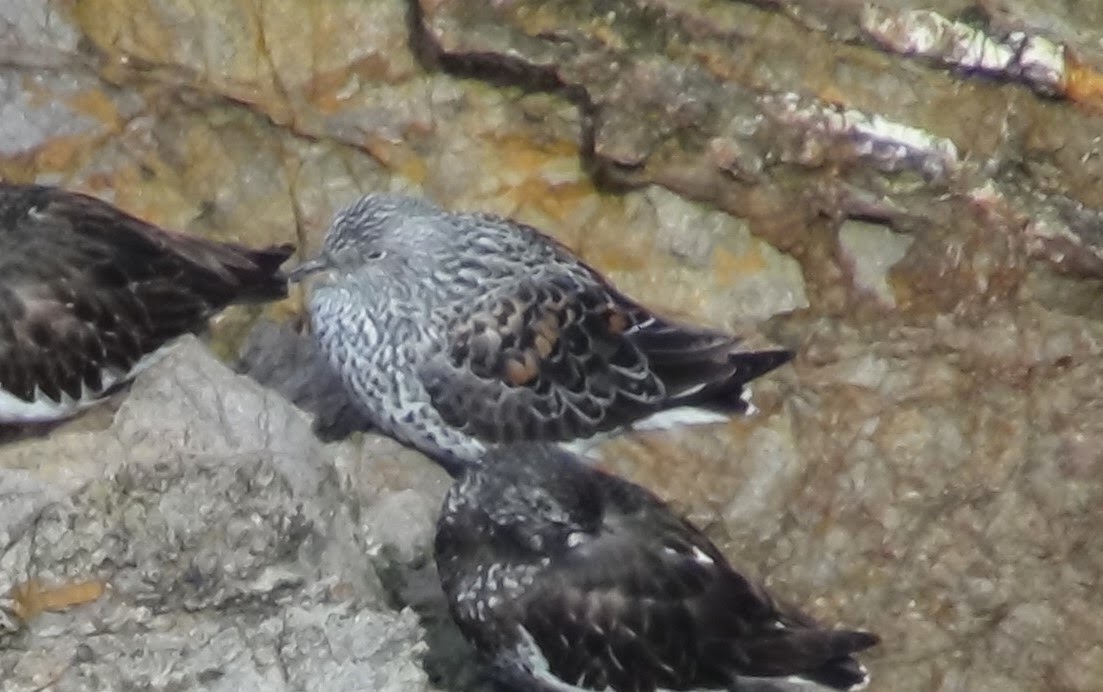
Surfbird hanging out with his sleeping turnstone buddies. Two of these fat shorebirds were mixed in with the larger group of similar-looking but differently colored other fat shorebirds.
Taken from the side. Some of these willets are getting more marbled in preparation for breeding season.
Look at that amazing contrast between flashy open wings and otherwise drab coloration. I'll bet they're thinking "will-it rain" har har. The answer: yes.
The rain will come soon.
We then ate our sandwich lunches in the car at Ocean Beach. There, I got a year bird, one that I am pretty embarrassed that I haven't gotten already in Santa Clara County: the brown-headed cowbird. Additionally, several gulls were attracted to the food inside of the car and came dangerously close.
Wow that view is stunning.
A very worn out juvenile gull.
Brown-headed cowbird
After a brief meal, we went down into San Mateo County to the Devil's Slide Coastal Trail, a beautiful trail right by a cliff. There was a nice view of an island where a breeding colony of Brandt's cormorants resided and supposedly common murres and pigeon guillemots too but I did not get to see any of the latter two birds. The wind here was huge At one point, the trail passed in between two cliffs, where the wind was even more concentrated and was literally screaming.
Coastal scrub overlooking ocean
A non-native sweet alyssum. These are common garden annuals that have become quite widespread in California, especially areas of maritime climates.
The native seaside daisy Erigeron glaucus. Both this and the semidecent shot above were taken by my little point and shoot.
Likely a hearty peregrine or raven meal. Those two predators were both seen in the area, with the peregrines supposedly nesting nearby
Cormorant colony on the island
Interesting sedimentary rock island
Additionally a few pelagic cormorants were using the cliffs, likely breeding here as well.
We then headed further south to my favorite birding spot in the peninsula county: Pillar Point Harbor. As we arrived, it started raining again and the winds picked up even more. Not letting this stop me, I walked forward and got my only lifer of the day right next to shore in the harbor. The bird was a lovely winter plumage RED-THROATED LOON, identified with its small, slightly upturned beak and clear distinction between black and white. Additionally in the harbor was a beautiful common loon in breeding plumage. It's crazy to think that this loon has likely swam both in a California coast kelp forest and a pristine Minnesotan glacial lake. Wow as I bird more, I realize more how amazing migration is. Nature in general is amazing. As I walked closer to the jetty, I tried jumping straight up and the wind blew me back a few inches.

Such a cute, little loon. Thanks for being cooperative! Unfortunately the common loon was too far out and I was unable to get a picture with the point and shoot (My dad didn't want me to bring out the camcorder to the rain)
3 red-breasted mergansers braving the weather conditions and still diving
First of year brant. These sea geese look so cool.
Mixed shorebird flock and brant
The flock consisted of whimbrels (larger birds with curved beak), marbled godwits (larger bird with slightly upturned beak), black turnstones (the black ones), and an awkward dowitcher sp. (little brown bird to the right of the godwit. I suspect short-billed due to shorter beak, habitat, and more curved supercilium, which would be a year bird but not sure as it didn't call). It was strange how the dowitcher didn't have a bunch of its friends with it. Also I found it strange how I didn't see a single grey plover that day. I don't think that they would all migrate this early and I saw tons of them in January...
No California sunshine here. As I scanned over the water, I saw a flock of 11 brown pelicans flying just inches over the giant waves (they were much larger in real life than in this picture).
The view was breathtaking (much more so than the picture).
Contrast of the rougher ocean to the left and calmer harbor to the right.
Sweep of the harbor.
The final stop was at the Pilarcitos Creek Mouth. Nothing was of much interest except for a male surf scoter hanging out in the lagoon rather than in the ocean from the harsh weather conditions. No interesting gulls appeared (or if they did, I just didn't notice).
Dat rain
Douglas' iris blooming in the scrub.
Well that concludes the truthful account of April 1st. The day added 5 species to my year list, not exactly worth this very long trip but the views were spectacular and the experience wonderful. Until next time, enjoy life and love nature!